

How Much Amps Does A 55w Hid Draw On Start Up
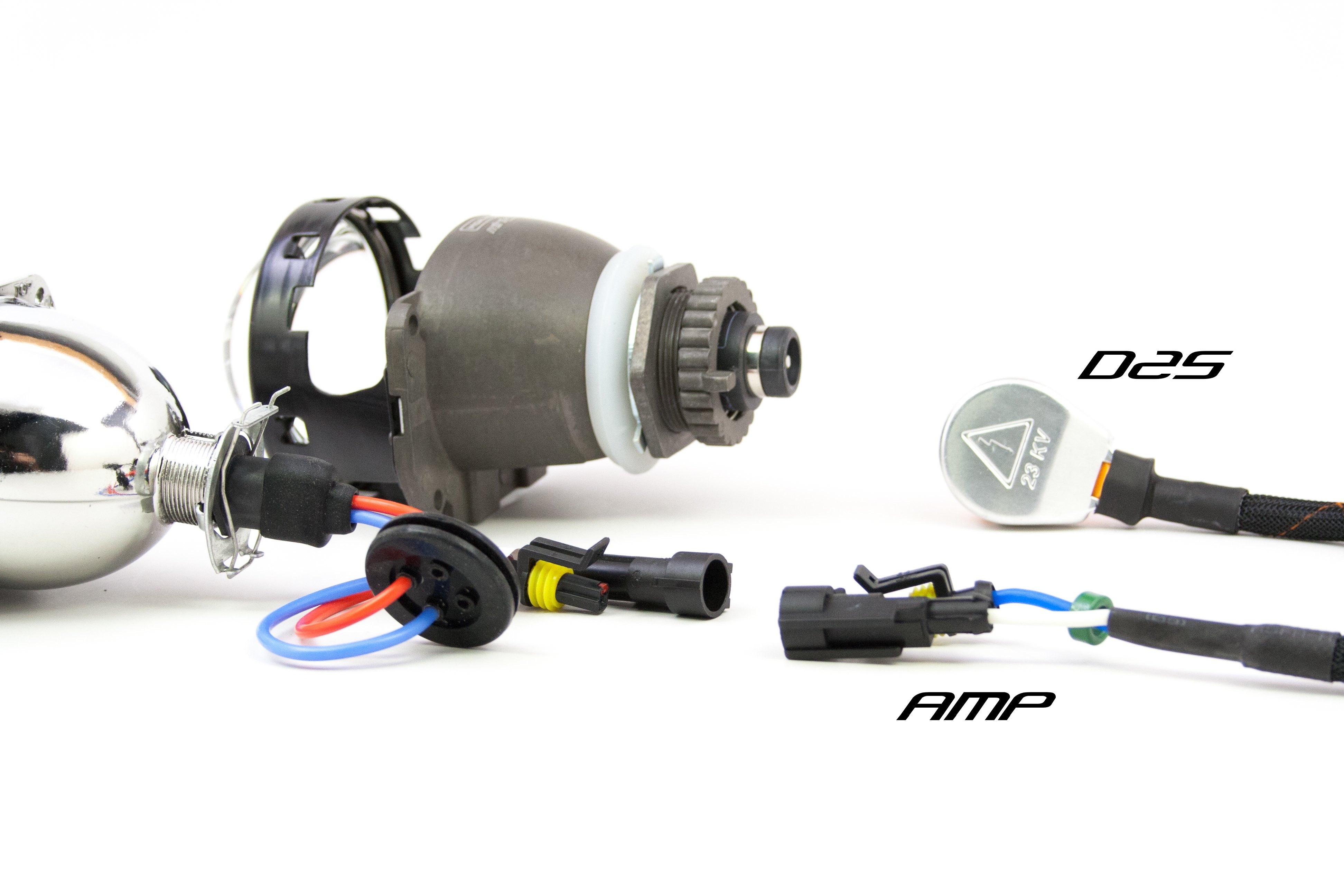
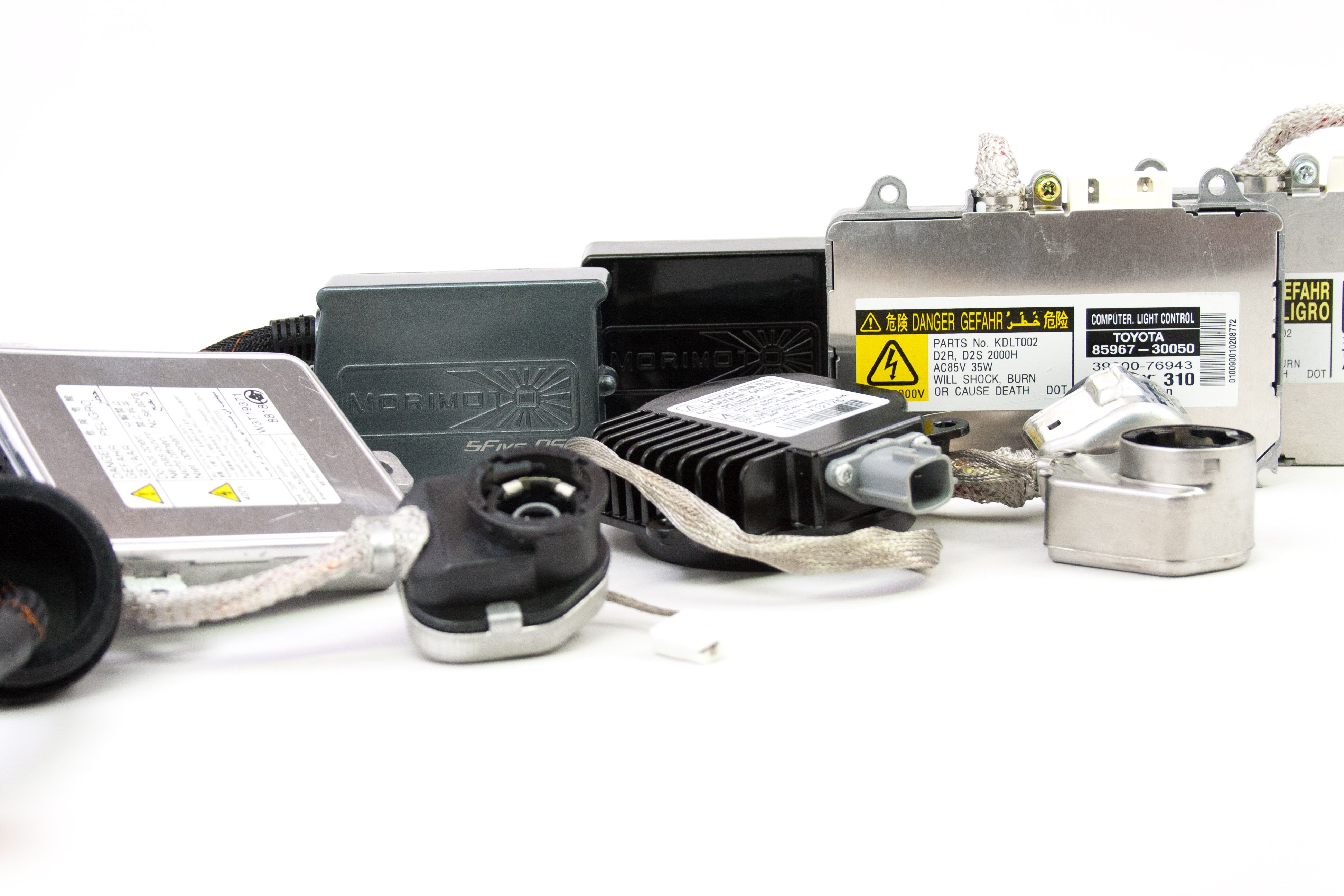
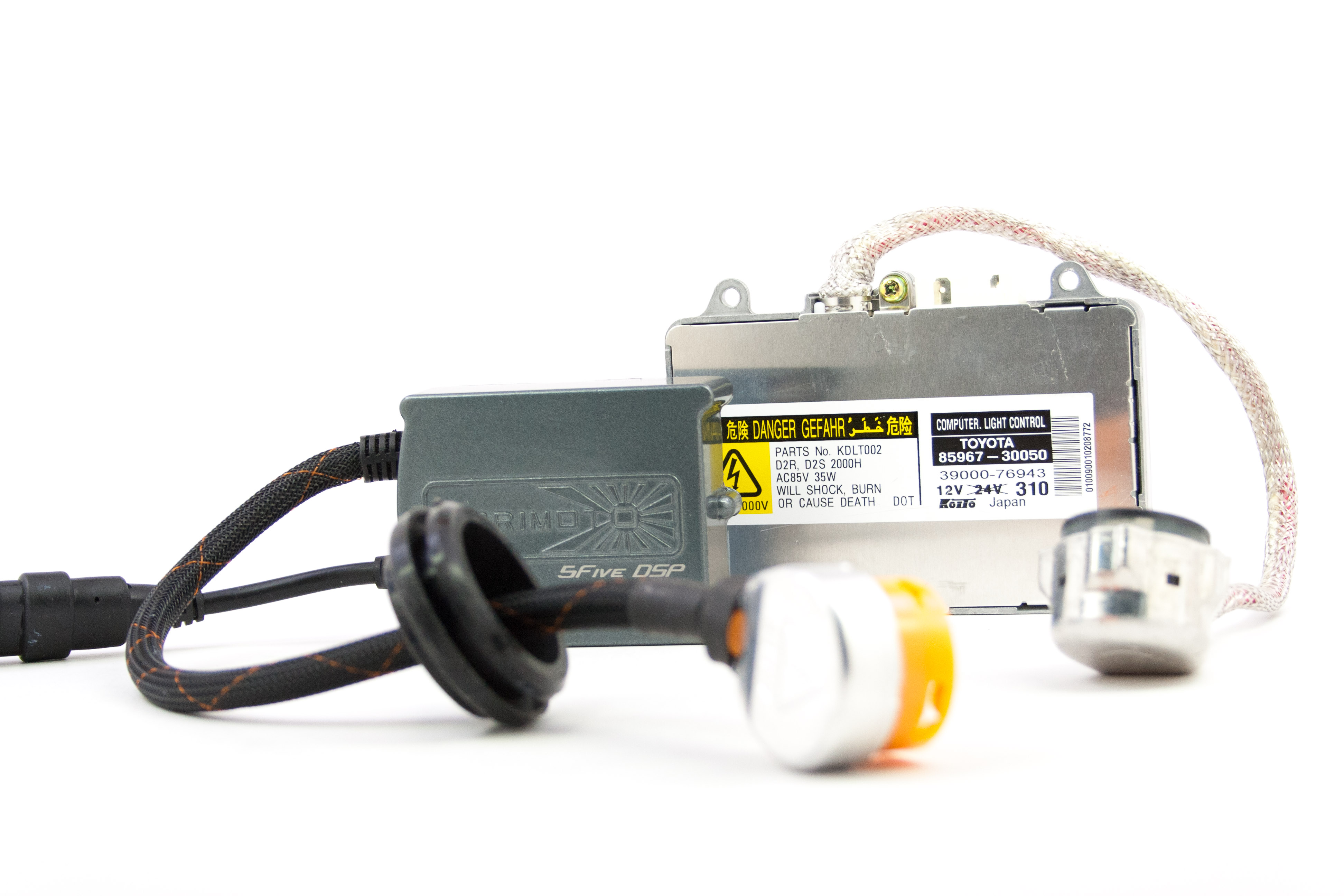
In 1993, BMW became the start automaker to offer a vehicle with HID headlights. Powered past a monster sized HID ballast (around the size of a brick) that ran off Ac Power, it utilized a bulb simply designated as "D1." The first American-made HID headlight system was offered in 1996 by Lincoln on their MKVIII. Their Sylvania-produced system was one of a kind since it ran on DC current. Due to the blueprint'due south poor reliability relative to Air-conditioning systems, when Osram took over Sylvania their "Blazon 9500" DC ballast was discontinued. Today, ballasts run on AC electric current, are compact in size, and have an expected service life of eight to ten years. one. What kind of projectors are you using? The projectors ultimately decide the seedling size, which determines compatibility with ballasts. For example, projectors such every bit the FX-R Bi-xenon, TL Bi-xenon, or S2000 low beam all have D2S bulbs – meaning you'll need a anchor with an output for the D2 seedling base. Projectors like the Morimoto Mini H1 take a H1 HID bulb which volition have AMP inputs, and therefore demand ballasts with AMP outputs. AMP > D2S Adapters: Though you could always employ a set of AMP to D2S or D2S to AMP adapters to force compatibility betwixt ballasts and bulbs, it's definitely more than reliable when the anchor is just naturally uniform with the intended bulbs from the start. Certain adapters piece of work, but they add a weak link in a high-voltage line, so they shouldn't be used as a permanent solution here. The Retrofit Source offers 4 options for those seeking D2S uniform ballasts: 1. Denso Slim 2. Matsushita Gen V 3. Morimoto 3Five D2S 4. Morimoto 5Five D2S And three options for those needing AMP compatible ballasts: one. Morimoto 3Five two. Morimoto 5Five three. Denso Slim with AMP conversion 2. What wattage is correct for you? When it comes to ballasts, the wattage rating will determine the intensity of calorie-free produced by the seedling. The two most common options are 35w and 55w, but hither and there, you'll see 70-100w ballasts besides. Without exception, all vehicles with factory-equipped HID headlights run 35w ballasts. With the variety of choices here, what's right for you? 35W: — Provides the best everyday and long term reliability. — Runs the bulbs at the coolest possible operating temperatures, aiding in the longevity of crucial reflective finishes inside the projectors. — Produces a light output that's still more than fairly brilliant, especially when coupled with a adept set of projectors. — Bulbs volition run at their rated Kelvin/color temperature. 50W: — Provides approximately 25-30% more intensity in the lite output. — Reduced reliability and lifespan of the ballast itself and the bulb. — Added rut tin potentially reduce the reflectivity inside projectors afterwards prolonged use, peculiarly if the projector is minor in size (making it less capable of absorbing and shedding the rut) — Washes out the color of the HID bulb (if that seedling is non specially made for 55w ballasts) seventy-100W: — Extremely bright, glaring output fifty-fifty if used in a projector based headlight. — Poor short term and long term reliability which also affects the bulbs. — Loftier potential for over-heating and ruining crucial surfaces inside headlights/projectors. — Consumes a lot of power from the car'southward electric system. 3. Should you use OEM or Aftermarket Ballasts?The more expensive OEM ballasts such every bit the Matsushita or Denso units will not brand your headlights whatsoever brighter than a less expensive aftermarket anchor. Though, there is a reasonable margin of quality between OEM-fabricated and really cheap aftermarket HID kit ballasts; mostly in terms of long-term reliability. OEM ballasts too tend to warm the bulbs upward to their full operating intensity a few seconds faster than aftermarket units. — Generally never available with a defended D2S output, simply AMP versions available. — Plastic housings with cheap hardware, lack of any kind of quality materials. — Super slim design – from Alibaba to the eBay special-these are all the same verbal ballast — In broken English, the clarification refers to their origin as "Philips" or "High german" made. Come on. Ane downside to OEM vs. aftermarket ballasts is that the OEM ones typically are non as "waterproof' every bit the aftermarket units. This is because they're commonly partially or completely mounted within a headlight assembly on their original awarding. Aftermarket ballast manufactures know that their ballasts will be exposed to the elements, so they're typically designed with fully sealed casings. Now we tin can offer a full potting/waterproofing service for the OEM Ballasts to protect them for $100, but Morimoto ballasts are not only externally sealed from the elements, but the electronics are covered with rubber potting chemical compound – protecting them from failure even if submerged completely underwater. iv. What kind of space do yous have available? In nigh cases, the size of a anchor won't really matter besides much, only if infinite is tight nether the hood (especially close to the headlights) this may be something to consider. Retrofitters working on motorcycles should definitely pay attention here too, specially if you lot have no fairings at all. Plan alee to make sure that: — You take space behind or underneath the headlight housings to mountain the ballast — That the specified output length (from computer to seedling) will be long enough to meet your needs. five. How important is a good warranty to y'all? As the main component responsible for running your headlights – it's important to brand certain you'll be backed upward in case of failure. Aside from picking out a high quality ballast to begin with – picking a vendor to back it when in need is also a decision of importance. — How long is the warranty period? — Is the visitor that sold it and then well-established that they'll even be around side by side yr to honour their great "lifetime warranty"? — How like shooting fish in a barrel is it to make a warranty claim? If your ballast dies, practise y'all take to return it for "inspection" or "service" before you lot get a replacement? The Morimoto line of ballasts offer the about bang for the cadet. They have a neat track record for reliability, surprisingly fast warm upwards time, an unbeatable warranty/replacement policy, and a peachy looking pattern that's non only meaty, simply is also waterproof and mounts anywhere. If you're an OEM or nothin' kinda guy, get for the Denso'south. In our entire history, we've replaced very few due to failure. Take care of them by mounting them in a moisture-free environment, and they'll probable have care of you forever too. BALLASTS Showtime Upwards IN THREE PHASES: 1. Ignition: The anchor sends a high voltage pulse through its output similar to a spark plug which travels across the electrodes in the HID seedling, ionizing the halide salts and xenon gas inside information technology's capsule to create light. ii. Initial phase/warm up: The bulb is driven with a controlled overload from the ballast. Here, the bulb's capsule is all the same operating at high voltage and the temperature is rising quickly, vaporizing the halide salts and making the light output from the bulb spectrally consummate – which fills out the axle blueprint. The resistance between the electrodes besides falls; the electronic ballast control gear registers this and automatically switches to continuous operation. All metallic salts are in the vapor stage, the arc has attained its stable shape and the lumen output from the bulb is maxed out. The ballast now supplies stable electrical current so the bulb won't/shouldn't flicker. In D1 and D2 systems, the stable operating voltage is AC85V, and AC42V in D3/D4 systems. Cantankerous COMPATIBILITY Between BALLASTS AND BULBS: Ballasts designed for utilize with D2S/D2R bulbs: — The igniter is office of the ballast system. — AC85V stable current for bulbs containing mercury — The most commonly used kind for retrofits because the bestperforming projectors employ D2S bulbs. Ballasts designed for utilize with D1S/D1R: — The igniter is office of the bulb, not function of the anchor system. — AC85V stable current for bulbs containing mercury — Condign more mutual in OEM applications, but not widely used for retrofitting considering projectors that use these bulbs lack in performance. Ballasts designed for employ with D3S/D3R: — The igniter is part of the seedling, not part of the ballast system. — AC42V stable current for mercury-free HID bulbs — Near common in late-model American and European fabricated applications from Audi, GM, and Ford. Ballasts designed for employ with D4S/D4R bulbs: — The igniter is part of the ballast system. — AC42V stable current for mercury-free HID bulbs — Originated and still most common in Toyota/Lexus applications in their efforts to exist eco friendly. More often than not a flake more than bright, but non quite as white! Ballasts designed for utilise with D4S/D4R bulbs: — The igniter is part of the ballast system. — AC42V stable electric current for mercury-free HID bulbs — Originated and still near common in Toyota/Lexus applications in their efforts to be eco friendly. Generally a bit more bright, but not quite as white! I WANT TO Employ AN OEM Ballast WITH AN AFTERMARKET Blazon BULB, OR VICE VERSA: D2S/AMP adapters: — Allows the use of D2S/D2R bulbs with ballasts made for AMP connector bulbs. AMP/D2S adapters: — Allows the use of AMP connector bulbs with OEM ballasts made for D2 serial bulbs. Output conversion: — If the igniter is not independent in the D2 socket, the socket tin be cutoff completely, and replaced with AMP connectors for a more permanent/reliable setup. We offer this service on our Denso ballasts. You can use 55w ballasts with standard 35w bulbs, simply the life of the bulb will be shortened a bit, and their color will Launder Out a bit. Once more, OEM applications use 35w ballasts, and when coupled with a high performance projector, you'll really be putting plenty of lite on the road even going that route. Some may debate that 55w ballasts pump up the foreground light so much that your optics will adapt to such intense lite and then close, ultimately reducing long distance vision. In full general, TRS advocates the use of 35w ballasts for most users and their applications. I am using a bi-xenon projector, practise I need a "bi-xenon" anchor? No, HID bulbs and ballasts do not demand to be bi-xenon specific when used in a projector based arrangement to be capable of producing light for low and high beam modes. THINGS TO CONSIDER
Indicators of cheap quality aftermarket ballasts:
The ballasts or unabridged HID kit costs ~$30, how tin can a quality product be produced, imported, and re-sold for $thirty and still produce a profit at that price? Makes yous wonder the cost of components or R&D going into them in the first place, doesn't information technology? (Though that doesn't stop other companies from selling the same POS for $200-$300 just to give consumers the illusion of it's supposed high quality)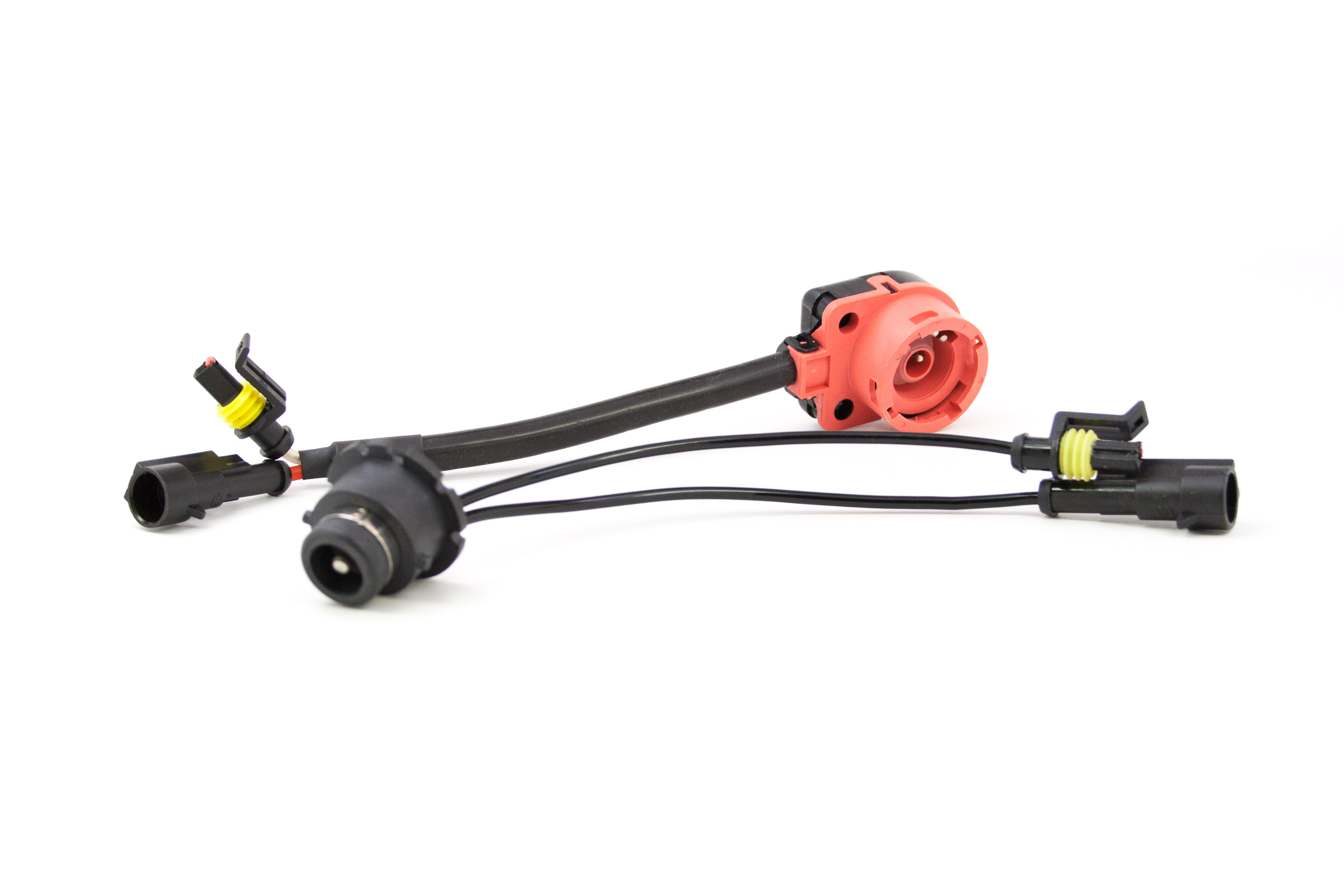
OUR RECOMMENDATION FOR RETROFITTERS
Farther READING
three. Continuous performance:
Is brighter always meliorate? Looking for a brighter output? Ane way to make your bulbs burn brighter would be to select 55w high output ballasts. All OEM applications use standard 35w units, only if yous're a retrofitter looking to put the about possible lite on the road, and then these ballasts are for you. 55w bulbs are also available, and highly recommended for use with these powerful ballasts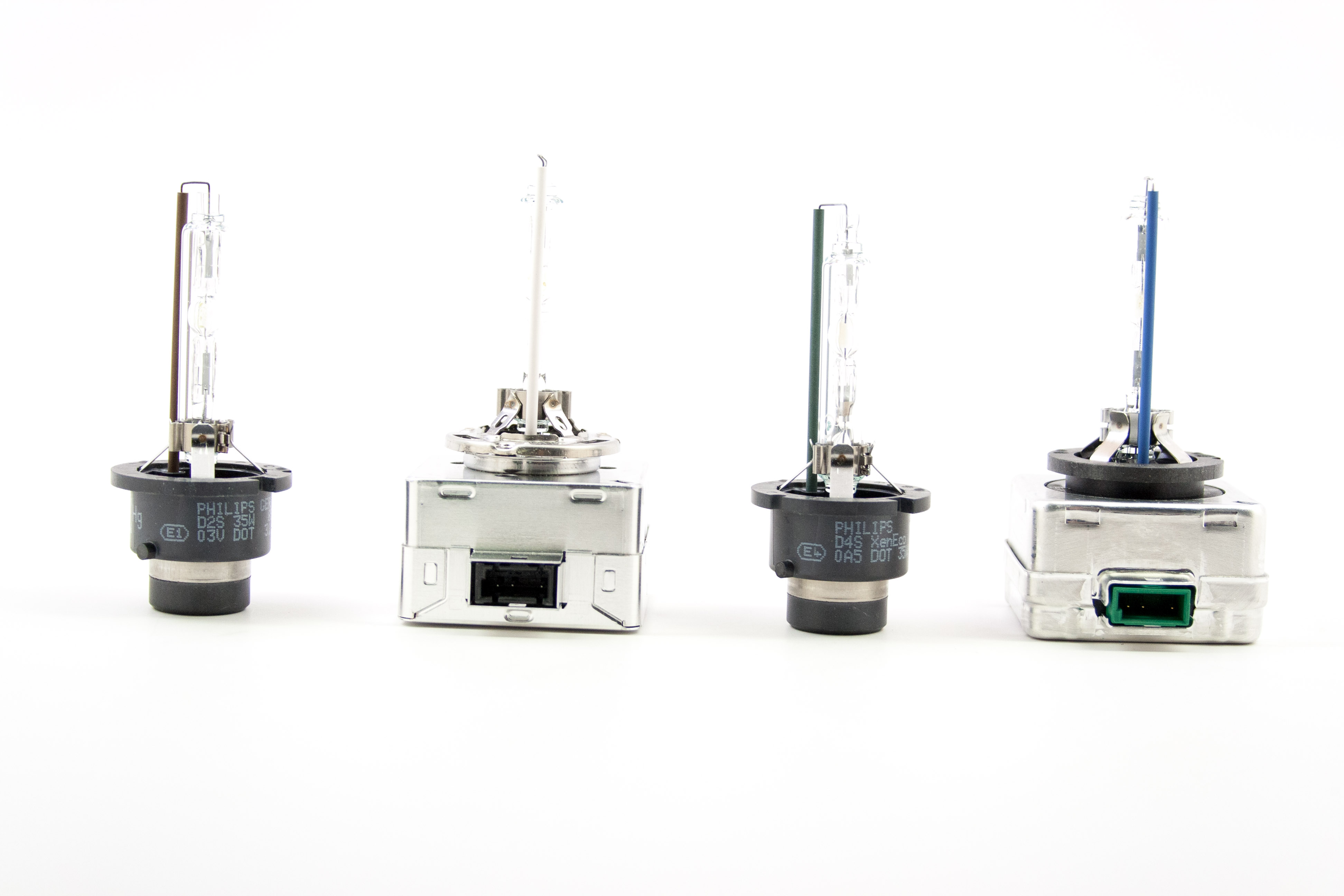

Source: https://blog.theretrofitsource.com/headlight-tech-hid-ballasts
Posted by: howardtheirch.blogspot.com
0 Response to "How Much Amps Does A 55w Hid Draw On Start Up"
Post a Comment